
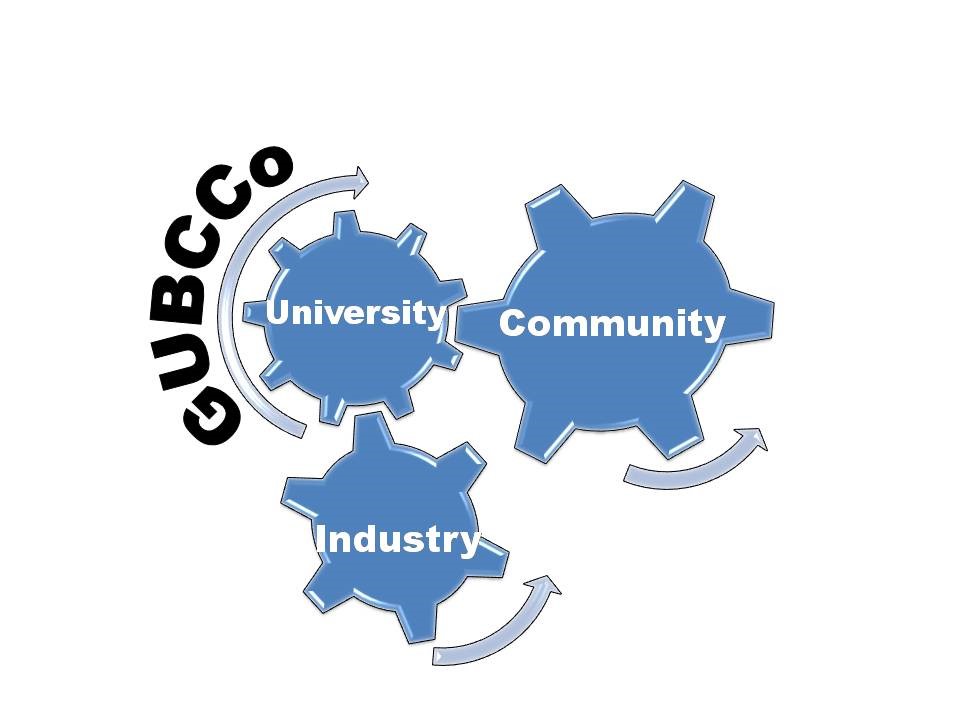
Why Uganda’s graduate unemployment crisis demands a shift from theory-driven education to enterprise-based university ecosystems, and how Global University Business Club Limited provides a proven, policy-ready model.
Reimagining Graduate
Employment in Uganda and the Strategic Role of GUBCCo in Building
Enterprise-Based Universities
Why Uganda’s graduate unemployment crisis demands a shift from
theory-driven education to enterprise-based university ecosystems—and how
Global University Business Club Limited provides a proven, policy-ready model.
Uganda is facing a daunting paradox: while it boasts
one of the youngest and most vibrant populations in the world, it is on the
other hand grappling with a "disheartening" graduate unemployment
crisis. Data from the Uganda Bureau of Statistics (UBOS) indicates that the
country produces over 700,000 graduates annually, yet less than 100,000 are
absorbed into formal employment (UBOS, 2024; Plus News, 2025). This leaves
hundreds of thousands of university and college graduates in a state of
professional limbo, often relegated to underemployment in the informal sector
or "last resort" hustles like the boda boda industry (Babyetsiza,
2025). To mitigate this, the government must look toward innovative,
scientifically-backed ecosystems like the Global University Business Club
Limited (GUBCCo).
A primary driver of unemployment in Uganda is the
structural mismatch between theoretical university training and the practical
demands of the contemporary labor market (Ssempebwa, n.d.). GUBCCo addresses
this by implementing a "learning by doing" pedagogical model. Unlike
traditional academic curricula that prioritize rote memorization, GUBCCo
fosters entrepreneurship clubs and hubs where students engage in the
replication and commercialization of university-based projects into the
community (Babyetsiza, 2020). By transforming academic assignments into viable
commercial ventures before graduation, GUBCCo ensures that students exit the
university system not as job seekers, but as seasoned job creators.
One of the most significant barriers to youth
entrepreneurship in Uganda is the lack of startup capital. Estimates suggest
that 64% of unemployed youth lack the funds to establish businesses due to
limited access to affordable credit (Kazaara & Kazaara, 2023). Global
University Business Club Limited mitigates this through a structured Savings
and Credit Cooperative (SACCO) scheme. Inspired by the microfinance revolution
of Muhammad Yunus, GUBCCo mobilizes savings from within the university
community, students and staff alike, to create a self-sustaining pool of
capital (MIT Solve, 2020). This internal financing model allows graduates to
access loans without the prohibitive collateral requirements of commercial
banks, effectively "de-risking" the transition from classroom to
market.
Even when graduates successfully launch businesses,
they often fail due to poor marketing and distribution networks. GUBCCo
integrates an e-commerce model, influenced by global leaders like Amazon, to
provide a digital platform for graduate-led enterprises (Babyetsiza, 2025).
This digital infrastructure enables small-scale student projects to reach
broader national and international markets (MIT Solve, 2020).
The Ugandan government has historically relied on
"scattershot" initiatives like the Parish Development Model (PDM) and
various kindred youth funds schemes. However, these programs often lack the
structural capacity to absorb high-level graduate skills into sustainable
enterprises (Plus News, 2025). In this light, the Government of Uganda should:
Formally Recognize GUBCCo: Integrate the GUBCCo
ecosystem into the national entrepreneurship curriculum to provide a
standardized bridge between education and industry (UNIDO, 2014).
Provide Matching Grants: Partner with GUBCCo to
provide matching funds for the student-led SACCOs, amplifying the available
capital for high-potential startups (Southern Voice, 2023).
Support Legal Formalization: Streamline the
registration of graduate-led companies through the Uganda Registration Services
Bureau (URSB) to encourage the formalization of the 91.7% of youth currently
trapped in the informal sector (Southern Voice, 2023).
By adopting the GUBCCo model, the government can
transform the "ticking time bomb" of youth unemployment into a
demographic dividend, ensuring that Uganda's future is driven by a generation
of innovative, financially empowered, and market-ready graduates.
References
Babyetsiza, T. (2020). Global University Business Club
Limited. MIT Solve.
Babyetsiza, T. (2025). Uganda’s unemployment crisis
and the vision the government refuses to see. Expression Africa.
Kazaara, S., & Kazaara, G. (2023). Causes of
unemployment among the youth in Mabira Town Council. ResearchGate.
MIT Solve. (2020). Global University Business Club
Limited - Pitch Solution.
Plus News. (2025). Study Finds Unemployment Remains
Ugandans’ Top Concern.
Southern Voice. (2023). Skilling Uganda’s youth for
the fourth industrial revolution.
Ssempebwa J. (n.d.) Graduate Unemployment in Uganda:
Socio-Economic Factors Exonerating University Training.
Uganda Bureau of Statistics (UBOS). (2024). National
Population and Housing Census Report.
UNIDO. (2014). Partnering for job creation:
Entrepreneurship Curriculum Programme in Uganda.
United Nations Development Programme (UNDP). (2024).
Annual Report: Fostering Innovation in Uganda.
Dr.
Julius Babyetsiza (PhD)
Founder GUBCCo.