
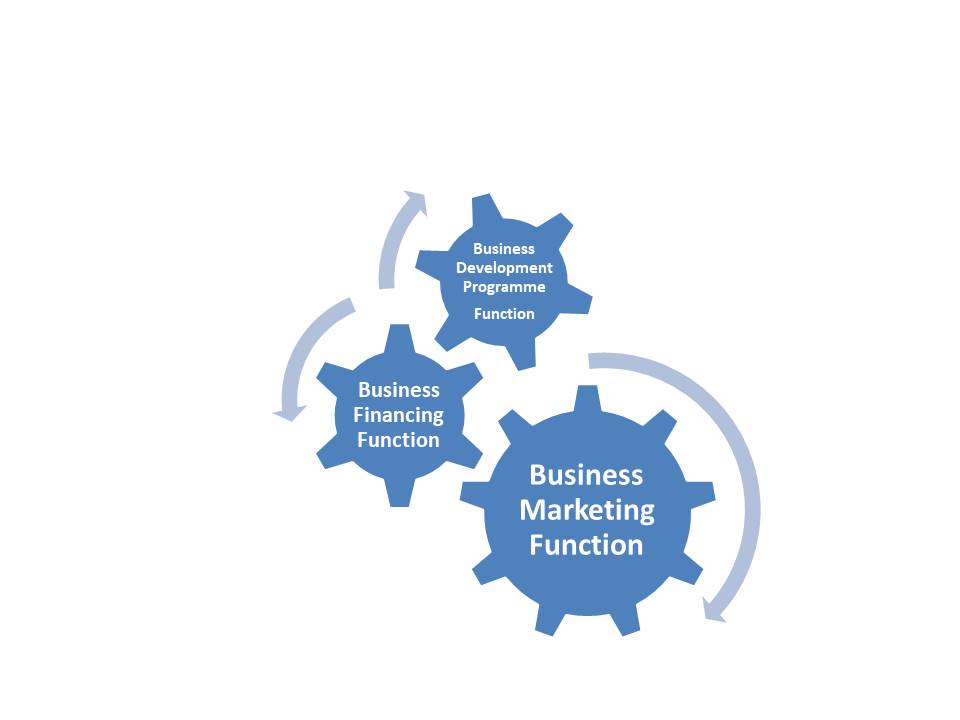
Despite hyping science disciplines
for national transformation, the government continues to sidestep
evidence-based decision-making, ignoring Global University Business Club
Limited (GUBCCo), the one practical, scalable, and tested solution to Uganda’s
graduate unemployment crisis.
I beg to be educated as to how long,
out of the four decades in power, Uganda’s leadership has presented science as
the magic key to national progress. From President Museveni’s speeches exalting
STEM disciplines to the preferential treatment of science teachers and the
recent curriculum overhaul, the message has been consistent: science will save
Uganda from economic stagnation and graduate unemployment.
Yet behind this loud rhetoric lies a
contradiction that has persisted for years and continues to cost the country
dearly. If science is truly valued: if evidence, logic, and rational
decision-making are as important as the President claims, why is the government
so reluctant to apply scientific principles when addressing the crisis that is
crippling Uganda’s future: graduate unemployment?
I have raised this question
repeatedly, including in my two recent Daily Express articles: Curriculum
Overhaul vs. Real Solutions and Museveni’s Blind Spot on Graduate
Unemployment. I have presented evidence, proposals, data, and a fully
tested solution, GUBCCo, developed through rigorous research and validated by
real-world outcomes. Yet the silence from the leadership has been consistent
and deafening.
This is not simply a political
silence. It is a silence that reflects a deeper problem in Uganda’s governance:
a refusal to adopt decision-making frameworks that could transform the
country’s most pressing challenges. And nowhere is this refusal more visible
than in the continued reliance on intuition over strategy.
This contradiction is not new to me.
In my autobiography Destined to Triumph, I recount how, just like
Museveni’s hyping of sciences today, Professor Ephraim Kamuntu once
passionately exalted mathematics as the ultimate intellectual discipline. At
that time, I had performed excellently in Mathematics at A-Level but
unexpectedly fared poorly in Economics, despite having excelled consistently in
class. Disappointed, I resolved to repeat Senior Six, hoping to correct the
anomaly. Seeking guidance, I approached a neighbor, Professor Ephraim Kamuntu, an
Old Boy of Ntare School where I studied A-level.
Instead, Prof. Kamuntu gave me what
he regarded as a rational, science-based explanation. He told me that mathematics is the
foundational physical science from which all other sciences derive, and that if
one excels in mathematics, then one can excel in any other discipline. He
reminded me that when ancient Egyptians constructed the pyramids, one of the
Seven Wonders of the World, the only science available then was mathematics. This
saw me abandoning the idea of repeating Senior Six - mathematics had already
validated my intellectual capacity; and God saw my eyes with winning a
scholarship through the Ministry of Education to study statistics in the former
Soviet Union. It was the same kind of selective “science-worship” we see in
Uganda’s national leadership today, where the prestige of science replaces the
practice of science.
In the universities where I later
taught Operations Research, I emphasized decision science and, in particular,
game theory, especially its three core concepts: positive-sum games, zero-sum
games, and negative-sum games. These frameworks are powerful tools for
evaluating policy and understanding how leaders’ choices shape national
outcomes.
A positive-sum game is when all
parties gain through cooperation. A zero-sum game is when one party’s gain is
another’s loss. A negative-sum game is when everyone ends up worse off. These
three concepts perfectly describe the government’s posture toward graduate
unemployment.
If Uganda were pursuing a positive-sum
strategy, it would embrace GUBCCo, which creates new value, expands the labour
market, equips graduates for productive work, and grows the economic “pie” for
all: government, employers, graduates, and the economy. This is what scientific
decision-making would require.
Instead, the government behaves as
though it regards GUBCCo’s rigorous graduate unemployment solution as a
zero-sum initiative, where acknowledging an externally developed solution is
perceived as a political loss.
More troubling, however, Uganda has
effectively settled into a negative-sum game. The government continues to
implement cosmetic reforms of curriculum revisions, ad hoc skilling programs,
youth funds, name it, knowing very well that these measures do not address the
structural causes of unemployment. Graduates remain jobless. Productivity
remains low. The economy remains stagnant. And yet the cycle of ineffective
interventions continues, year after year.
Negative-sum decision-making is the
worst form of governance. It keeps everyone losing simply because those in
power prefer predictable failure over disruptive reform.
The recent curriculum overhaul is a
textbook example. Rather than engaging students to create their jobs as part of
the curriculum, the government created subject combinations. Rather than align
university training with labour market demand, it merely rearranged classroom
content. The problem is structural, not pedagogical.
Uganda does not need new syllabi,
but rather it needs new economic structures. This is why GUBCCo stands out. It
was not built as a classroom intervention but as a national job creation
transformation model. It equips graduates with real market needs, builds
practical capability, and creates value where it did not previously exist. It
is a tested, scalable system designed for Uganda’s actual economic realities.
It is a positive-sum solution in the purest sense of the word.
The tragedy is that Uganda’s
leadership is not failing because solutions do not exist. The solutions exist, and
have been presented repeatedly. The failure lies in the unwillingness to adopt scientific
strategies.
The President’s long-standing habit
of elevating science rhetorically without embracing scientific reasoning has
created a dangerous national illusion. Science is not a slogan. It is not a
political ornament. It is a discipline of method, evidence, replication, and
optimization. If government truly valued science, it would apply these
principles in policymaking, not only in speeches.
The question that remains is simple
but urgent: how long will Uganda continue to celebrate science in words while
resisting its application in practice? How long will the leadership cling to
ineffective solutions even as the unemployment crisis deepens? How long will a
proven, positive-sum solution like GUBCCo be ignored simply because it
originates outside the political establishment?
Uganda stands at a crossroads. If
the leadership continues on its current negative-sum path, the country will
lose generations of talent. But if it embraces positive-sum decision-making, rooted
in evidence, not rhetoric, not intuition, the Country can finally address the
cycle of graduate unemployment.
The choice is clear: whether the
leadership will finally break free from the negative-sum cycle.
Dr. Julius Babyetsiza (PhD)
Founder GUBCCo.