Why African Universities Must Shift from Knowledge Mining to AI-Enabled Thinking, Innovation, and Real-World Impact.
I read with dismay the anxiety gripping many world leaders, and
most loudly, educationists in African universities, who argue that the growing
reliance on artificial intelligence (AI) among university students is eroding
critical thinking skills. They insist that critical thinking forms the
cornerstone of higher education. That much is true. What is troubling, however,
is the assumption that AI undermines thinking rather than enhancing it. This
posture reflects a deeper misunderstanding about the evolving role of
universities in an AI-driven world.
Their fear reminds me of my 80-year-old statistics professor, Seregeiv Kazorov
(RIP), at what was then Odessa State University of Economics in Ukraine. By the
time computers had become common tools for statistical analysis, age had taken
its toll on him. He kept his distance from computers—not because he could not
understand them, but because he lacked familiarity and confidence around them. Yet
he interpreted the computer output and made perfect sense of it. His brilliance
was not diminished by the machine; rather, the machine only extended his
capabilities. It is this spirit of embracing tools that seems absent in today’s
fearful university leadership.
The paranoia displayed by many African university leaders brings to mind Robert
Kiyosaki’s famous analogy in Rich Dad Poor Dad: if you place before
a monkey both bananas and a pile of money, the monkey will instinctively choose
the bananas, unaware that the money could buy unending bananas. Kiyosaki’s view
can be used to explain why many graduates choose salaried jobs over
entrepreneurship—they see the immediate comfort of employment and fail to
recognize the long-term wealth-creating potential of business ownership. But
they are not to blame, rather, universities which emphasizes cognitive rather
than application domain.
In the same way, our university leaders cling to traditional knowledge-mining, lectures,
note-taking, memorization, and long thesis writing, while ignoring the
transformative potential of AI. They see AI as a threat to their familiar
academic processes rather than the powerful intellectual engine it is. They
remain unaware that AI can help produce more knowledge, faster, more interactively,
and with far greater depth than any library or supervisor alone can offer.
The core problem, however, is simple: they still believe that the
university’s primary function is knowledge acquisition. But AI has already
relegated that function. Today, knowledge is abundant, instant, and automated.
The true value of higher education has shifted from knowledge mining to knowledge synthesis and application.
That is the new frontier. And yet, our universities continue to insist on
1,000-page PhD theses full of mined knowledge but devoid of real-world
application. This devotion to outdated academic rituals shows just how far
behind the times our Makereres have fallen.
My own experience illustrates this shift. I began my PhD journey at Makerere
University, but after securing a partial scholarship, I completed it
elsewhere—at a university that offered a project-based, product-based PhD, rather than the traditional
thesis-heavy model. I gladly abandoned the thesis-only path and embraced the
product-based approach, which aligned with my vision for the impactful action
research.
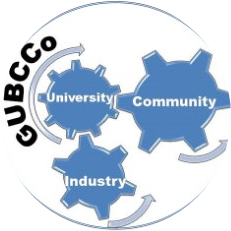
The product of my PhD is Global
University Business Club Limited (GUBCCo)—an ambitious, practical, and
rigorous initiative designed to address Uganda’s disheartening and worsening
graduate unemployment crisis. Whereas most academic works in the current
Makereres are merely into decorating library shelves, my PhD produced a
solution-oriented enterprise. I have presented GUBCCo to our universities,
including our premier Makerere—because charity begins at home—and to Kampala
University International (KUI) as well as to government institutions. Yet they
have chosen to keep their heads buried in the sand, unable or unwilling to
recognize the power of this initiative to meaningfully address graduate
unemployment in the Country.
This resistance is exactly the same resistance now being directed at AI. It is
a refusal to embrace new tools simply because they disrupt old thinking
patterns and institutional habits.
A case in point is the view expressed by Prof. Peter Msolla, Vice Chancellor of
Kampala International University in Tanzania (KIUT), who recently urged
universities to resist over-reliance on AI and to remain anchored in traditional
knowledge-mining methods (https://opr.news/eb86045251211en_ug?link=1&client=news). But insisting on
mining knowledge manually in the age of AI is like expecting an African
bachelor who has now married to continue cooking all his meals himself, or
expecting women to continue using millstones after grain mills have been
invented. Technology does not replace human value—it enhances human capacity.
AI is not the enemy of critical thinking. Rather, it challenges us to raise the
level of critical thinking demanded of students. When machines can gather
information in seconds, the real intellectual task becomes interpreting,
synthesizing, innovating, and applying that information. This is precisely the
shift that our African Makereres are afraid to make.
Instead of resisting AI, universities should redesign their curricula around
its strengths. They should place less emphasis on reproducing facts and more on
problem-solving, creativity, innovation, design thinking, and entrepreneurial
application. They should reward research that produces usable solutions, not
just voluminous documentation. And they should see AI as a partner in learning not
a threat.
The future belongs to universities that can pivot from knowledge mining to
knowledge creation and application. African institutions that cling to old
models risk irrelevance. Those that embrace AI-driven learning will produce
graduates who not only think critically but also create products, enterprises,
and solutions—a case is GUBCCo, which was found as living laboratory for an
action research PhD.
The question is not whether AI will reshape higher education. It already has. The
question is whether our universities will evolve—or be left behind.
By
Dr. Julius Babyetsiza
Founder GUBCCo.